One of the barriers to getting into comic books that I have often come across is not knowing where to start. I usually take that “where” to mean story-wise. There seem to be a lot of comics out there; do I start at the beginning? Is there a “beginning”?
I came across this barrier, too, even with my initial focus on certain characters, having just started watching the MCU.
Another issue that surprised me: Where do I even get comic books?
Once I got started with a few comics, I wondered how I would continue. I knew that there were more characters, series, publishers, and so on. Even though I had already gotten started, I’d sometimes feel like I was back at square one. Still, I found some guidance that helped me continue to learn about, acquire, and read comic books.
I started answering those questions above.
On this page, you’ll find some factors to consider when searching for comics to read, some tips, and my experience reading comics in Guilford County, North Carolina.
Factors to consider
- What do you like to read? Fiction, nonfiction? Any particular genres? Any genres you like or prefer in other mediums? These preferences may translate to what you search for in the comics medium.
- What else would you like to read? If you’re already familiar with comics, would you like to try something new? Feel like you’re in a reading rut? Consider ways to try something new.
- Do you like reading books digitally, do you prefer physical books, or do you like both? You can read comics digitally or you can read them as physical books. Depending on what you have access to, you may have more titles available to you digitally or as physical books.
- Are you interested in borrowing or buying books? You can borrow books from a library, a subscription service, or from other people! You can buy books from a local comics shop, a more general local bookstore, a big box store, online, or at a used bookstore.
- Are there certain topics you’d like to read about? Aside from genre, is there something about your work, or hobbies, or self that you’d like to read about? If you’re interested in baking, healthcare, academia, video games, community-building…there are comics out there about those topics and more!
- Are you interested in comics from around the world? Comics cultures exist around the world. You can read comics written in English, French, Japanese, Spanish, Korean, and more. You can read comics based in different cultures. You can read translated comics. In addition to finding these comics online, you may have local access to manga, manwha, bande dessinée, and more.
- What kind of narrative might you like? Narrative or format can feel like too broad of terms—what I mean here is more like, might you enjoy reading comics as standalone books or as a part of a series? In addition to there being comics in different genres, fiction and nonfiction, there are also different ways that stories are told—and published. You can read standalone stories such as graphic novels, graphic memoirs, and one-shots. Another way to read comics is as a series. Series may be more familiar, relatively, as people may be more familiar with comics as floppies. Floppies, or single issues, are generally published periodically as part of a series. Those single issues form a story told over time that may ultimately be collected as a trade paperback that can feel more like a graphic novel. In addition, some comics are published as collections or anthologies, and some graphic novels are a part of a series like a trilogy. You can also read shorter comics, such as comic strips or webcomics, that can be episodic or serialized (like a television series, which has episodes and seasons that are also comparable to single issues and series).
- Would you like to learn more about the “Big Two”, Marvel and/or DC? There are decades and decades of work from Marvel and DC, the two most well-known publishers of comics in the United States. Even if you are familiar with the characters from their stories, a seasoned reader, or are familiar with Marvel and DC character from mediums other than comics, there may be more you can read and learn.
- Would you like to read more creator-owned comics? Outside of the more collaborative way that Marvel and DC books are created—with writers and illustrators/artists coming together to create and/or give their spin on a a character, there are other ways comics are created. There are original graphic novels (OGN), creator-owned publishing companies, and alternative, underground, and indie comics otherwise. You may even have comics creators in your town, city, or region that share or sell their work.
- Are you interested in learning about comics through community? Online and offline, you may find places and spaces where people are talking comics. Examples include fan communities, local comics shops, book clubs, library programs, academic programs, movie clubs, comic cons, professional groups, and comic creator communities.
- Would you like to learn about comics? In addition to reading for pleasure, you can learn more about why comics are what they are and what they can be. There is nonfiction about comics, more technical resources about comics creation, history of comics, comics journals, comics journalism, comics magazines, and you can talk to people such as local comics shop staff and librarians,
More comics stuff on my site:
Aden’s Book Wish List (and more on borrowing and buying books)
First, I wanted to orient this with what got me interested, what my starting point was.
It was WandaVision.
It was the WandaVision era. That wonder if the early pandemic times. The talk about the show often brought up a few storylines and features of Wanda and Vision’s characters over and over and I wanted to know as much as I could about them. I checked out some related titles through the Greensboro Public Library (GPL) and there was no looking back.
I read Saga next and the rest is history.
Note: These weren’t the first comic books I ever read but I was never “into” comic books or graphic novels before. Also, while comic books were relatively new to me in 2021, the other type of “comics” were not. I have had a history with comic strips and webcomics and comics compilations for forever.
How do I learn about comics? I would say the major way I learn about and pick storylines or characters is to think about which publisher, writer, artist, or character that I have already liked and follow that thread. As examples, I’ve searched through Image Comics as a publisher because of the types of stories they publish; I like Jeff Lemire books; I picked up books with Gabriel Hernandez Walta as the artist; I am paying attention to Wolverine and Machine Man as characters whose stories I’d like to dive into.
Things can go sideways with that strategy, though. You can love a character because of what you’ve read so far but then you come across a run or a decade or a writer that sort of ruins the character for you. You can love an artist’s work but not click with the writing. You can love what a writer is doing in a book but not click with the illustration.
Some other ways I find what to read: recommendations from comic book shop staff or from YouTube videos; because I liked a character in a show or movie; because I want to follow a particular storyline or event. Again, you can have strategy but some of the fun of this is that it’s a bit like finding treasure. You don’t have to be a completist either. You can love one character in one series and not like them in another, for example. That’s because the more-or-less collaborative storytelling with publishers like Marvel give characters various lives, in a way. And just because you liked one or a couple of issues or a character or a premise in a limited series from an independent publisher doesn’t mean you have to finish the series.
You may even get comic books recommendations generated for you—depending on a service you may use like a reader or a site like Goodreads. Even the library will make recommendations.
So let’s look at the library more.
Library
When I decided that I wanted to read comic books, I was looking for books. If I was looking for books, I was going to check the library.
While I don’t live in the city, I’m able to have a Greensboro Public Library (GPL) card. I refreshed my online account with the library and got to know certain perks well—mostly being able to pick up books at a library branch convenient to you that have them transported from another library. I reacquainted myself with Libby. Over a year later, I found out that Hoopla, a digital media service, was a thing at libraries but not GPL. Luckily, High Point Public Library has Hoopla as a service and thank goodness I could get a library card there. Ive also familiarized myself with the selection at Jamestown Public Library.
- Physical books from branches Getting comic books from branches has been an option. The inventory seems much higher at GPL via Libby than as physical books. When I first searched for books in the library’s online system—by publisher, character, or author—I didn’t find much. Now, it could be that I just didn’t find much of what I was looking for and the search parameters for what I was looking for may have excluded lots of other comic books. Maybe. It seemed like I was coming across books about comic books more than actual comic books. I did have to make sure I was adept at using the library’s online search tools to find what I was looking for. I mean, I could also just ask a librarian! It does seem that certain branches have more comic books and graphic novels than others. If you have a library system in your area, that might be the case there, too. I also generally found that many comic books, particularly superhero ones, were shelved in the YA section. I started going straight to that section to start off browsing during a visit but other titles may be elsewhere in the library.
- Libby I have found many comic book titles on Libby using my library cards. With my GPL card, I found popular series, in particular, it seems. Libby is where I read the Vision (2015-2016) series and Hawkeye (2012-2015) series, as well as Saga, so it was a great resource to start off with. My access to Libby includes a limit of 6 checkouts at a time. Libby doesn’t have a “smart panel” feature that allows you to read a panel at a time.
- Hoopla Hoopla is like Libby but with a focus on comic books! Ok, here’s another general difference: Libby is a platform libraries use for the selection of books they want to offer to patrons; Hoopla has its own library that local libraries can provide to patrons by allowing them a certain amount of checkouts per month. Libby might have a limit on what you can check out at any one time, but you can check out books during the month as long as you return some. Hoopla is available through High Point’s library in my area. You can borrow up to four titles a month “instantly” though they have a couple of other features that allow you to borrow books outside of that limit. If your library has Hoopla, they may allow you to borrow more or fewer titles per month. The service does have a smart panel/guided view reader. I was shocked by the titles available. It’s basically all the comics. Well, all the ones I was looking for. I was having trouble, to my surprise, finding where to read comic books online other than on Libby and Marvel Unlimited. Hoopla just seemed to have everything in one place.
Tip! Check to see what comics resources your local libraries have and whether you can get a library card from library system other than your city’s or town’s.
Local comic book store
I love love love the library but I value purchasing comic books and graphic novels, too. It can be easier to just buy the thing rather than waiting for a library hold or reading only part of a series because it’s all that’s available. Sometimes you want to have a physical copy of a book. I might want to support a particular writer, illustrator, publisher that way. I want to support the local comic book store.
I think it’s funny I wrote “local comic book store” because I immediately follow-up with thinking, as opposed to what? A non-local comic book store? Like, one that may be local but not locally-owned? Does that exist? Or, rather, are there comic book stores that are like large retailers? Also, not everyone has a local comic book store, right?
We have a lot, it seems!
I haven’t gone to all the comic book stores in the area but I’ve been to one many times. I frequent Acme Comics based on a couple of recommendations. I go by myself and often with other people. The people who work at the store are nice and helpful and have helped pick out the perfect book more than once. I’ve found out that a handful of people I know frequent the shop, too. After being a customer for over a year, I finally started a subscription box/pull list (I lean towards getting volumes, trade paperbacks, and graphic novels, otherwise). Their displays change often and seem fit for newcomers and long-time comic readers. The organization of comic books and graphic novels by publisher is really helpful for the publishers outside of DC and Marvel.
It’s not palpable now but I’m sure I was intimidated to go into a comic book shop at first. The stereotypes were there in my mind. I would have been content keeping this hobby online-only but it has turned out that the shop has been a great addition to it.
Tip! Eastgate Comics in High Point runs Eastgate Comic Con. If you’re not in the Greensboro/High Point/Guilford County/Triad area, or wouldn’t travel to it, search for comic conventions local or convenient to you. They might be at a library, hotel, convention center, or online.
Publisher
Many of the comics I’ve read come from Marvel or Image Comics. My comics resolutions have included figuring out the best way for me to get into DC titles and smaller presses or publishers. Seems easy to find smaller creators with things like webcomics and I continue to learn where the indie writers and publishers are.
- Marvel You don’t buy comics from Marvel’s website. Last I checked, trying to purchase comics prompts the site to ask for your area so that they can provide a list of local comic book retailers. After realizing that I would need to download an app from Marvel, Marvel Unlimited, to read comics—I did just that. I would have to buy a subscription to the app, which I did, and it turned out that the annual price for access to over 20,000 comics was worth the price after reading about 20 issues.
- Image Comics Image Comics also routes you to online or brick-and-mortar sellers if you want to buy a comic book but they also have another way to read comics. Their First Issues Free page allows you to read the first issue of many if not most of the comics they publish.
- Drawn & Quarterly I’ve known about D&Q for a long time, years and years, because a friend introduced me to the company. I read an Adrian Tomine title forever ago and thought about it and sequential art on and off over the years. My friend also gifted me a huge Moomin volume from the publisher. Browsing their site, I came across Lynda Barry’s books, solving a years-long quest to recall a comic book I read when I was a tween or teen. You can purchase the books off the website.
Amazon
I had a frustrating time using Amazon to purchase and read comic books the very first time I tried—which was that February of 2022. I think that purchasing physical copies of books from Amazon.com was never my issue—but it wasn’t what I was looking for. I was looking for another way to buy and read comics online. While I easily read comics on Comixology through a subscription using their app these days, there are hints of the back and forth between ComiXology, Kindle, and Amazon in 2022.
- Comixology I tried going to the website along with using the app. I went to Kindle, too, for some reason, to see if it was a duplicated selection. Still unsure. One of the most interesting things when I first started using ComiXology was its Originals line of comics. I’d like to learn more about how the Originals line works for the comics creators. I started off by reading the first four issues of Lost Falls and the first issue of Astonishing Times (since it comes from one of the comics YouTube channels I appreciated as a new reader). I do have a Prime account so “prime reading”, which seems like the label for comics you can read for free with a Prime account, seems awesome. Then there’s the full service, a separate subscription to “ComiXology unlimited”. Between all that and a free Kindle and/or ComiXology trial, I was able to read quite a bit of comics through Amazon.
- Kindle Kindle has guided view and bookmarks and that’s a plus. Seems to offer other dynamic layout options for a more customized reading experience. Seems to allow for annotations. It’s not bad, really. Just confusing when trying to figure it out along with Amazon and ComiXology.
Second-hand shops
- Ed McKay’s I’ve purchased some of my early comic books from Ed McKay’s. I got titles you hear about in the top 10 or top 20 lists for new readers. I tested out Y: the Last Man and Fables. The store divides the books by publisher and that makes it easy to look through for the smaller companies. I haven’t spent a lot of time looking through the Marvel or DC titles since there are so many more shelves and it’s a pretty busy corner of the store. I haven’t tried to sell any books back but I’m thinking about it. I’m getting to the point that I’ve heard and read some people bring up recently, particularly around the whole ComiXology/digital comic book stuff: I’m running out of room to store physical comics!
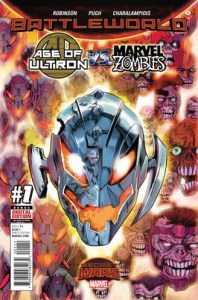
- Ollie’s Ollie’s has a whole comics and graphic novel section. I’m not sure what it looks like over time or season to season but I noticed that it had a lot of random stuff and one series that was the talk of the Marvel town at the time—Fraction’s Hawkeye. On a top shelf, there were a million copies of volumes from that run and the vast majority of them seemed to be L.A. Woman or a volume close to it. There were one to two tall shelves of comic books that included single issues, collections, volumes, and what looked like special editions. I thought it might be a good way to get into DC comics without spending a lot or paying for a subscription to their app. Ultimately, my favorite thing was seeing a WILD cover for a Marvel comic that had Ultron plus Battleworld, Zombies, Secret Wars, Age of Ultron…like, WHAT THE HELL IS THAT?! I must know but I’ll save it for a special occasion.
Buying new at non-comic book shops
This isn’t how I usually get books but it may be the easiest option if you’re new to comics and want to be in a retail space that may be more familiar to you.
As far as buying new vs buying used, buying and reading comic books can be as costly as buying and reading novels or other books. It can cost more sometimes if you are purchasing single issues when volumes, trade paperbacks, and other collections are a better value (value though some enjoy the issue-by-issue experience including the community around New Comic Book Day at local comics shops).
I’ve looked at comic books at Amazon, sure, but this is about brick-and-mortar that have an option for you to buy by shipping to the store or directly to you. I don’t think I’ve purchased any comics through a store like Barnes and Noble but I’ve at least searched for comics at Target. I’ve purchased books through a local non-comic book book store, Scuppernong Books. I might purchase t (online for shipping or pick up in store, or just going into the store) and found a nice little collection of sequential art when I visited the store recently.
This could also be the most straightforward option for purchasing comic books from a store for places that don’t have a local comic book shop or for people who aren’t able to or keen to purchase things online.
What next?
The top two things that come to mind about what’s next for me with how I learn about and acquire comic books are: trading and events. Specifically, I mean trading comic books with people or just sharing them. Like, hey, you have the first two volumes of this series and I have the last three for some reason, let’s swap! Or, oh my god, you have a copy of the hard-to-find or check out series, can I borrow it?! I don’t know if there are any formal or informal systems to do this trading—I’m just thinking of doing this with people I know. Then, specifically, I want to attend and participate in more comics-related events. Story-wise, publisher-wise, I’d like to learn more about manga. I recently downloaded WebToon and would like to get more familiar with it.
How I read comics
There are a few angles here. Let’s start with how I take in a comic book. I’d guess that I’ve read more comics on a digital reader than I have read physical copies. I like both. Digital comics are much more convenient when I can get the titles I want. I’ve probably found comics I like by reading something available digitally that I wouldn’t have if I scanned it on a shelf in-person.
I have read comics physically as single issues, as volumes, as collections, and as trade paperbacks. Digitally, I’ve read single issues through full series. Reading digitally more surprises me with how much story you can get in with about 20-25 pages of sequential art.
I have read digital comics on a cell phone, on a laptop, and on an app. The experience is way better on a cell and app compared to my laptop. Image Comics allows you to read first issues for free but in a two-page spread setup in a browser.
I started reading comics with a laptop and an Android phone. The cell phone was the best way for me to read digital comics. Then I started using an iPhone and got an iPad in the last handful of months—yes, it changed things! Reading on an iPad, just having that larger view, was great. The iOS apps seem to have their pros and cons but I haven’t settled on what those are.
A single issue of a comic book, at about 25 pages, doesn’t take long to read. I usually read volumes at a time where the differentiation between issues isn’t as noticeable as it is with physical single issues OR reading in Marvel Unlimited. Marvel Unlimited, so far, is where I can read a series but it’s presented issue by issue.
The experience you have reading comics can be different depending on whether you have physical or digital copies but also if you are reading single issues, a volume, or trade paperback. I’m not into collecting comic books but I feel like I want to know a little more about omnibuses or collectors’ editions. I’ve seen some that look really nice on the outside. While trade paperbacks have extras like variant covers or author letters, there may be more in the collectors’ editions.
I think I usually read comics in one of two modes: relaxed on the couch in the daytime next to a window or at night, in bed. Comic books (or graphic novels that have natural breaks in them) are often efficient and effective bits of story and art to get through which is good since I’m almost always, and exhaustedly, not in a relaxed state of mind. I appreciate having more time to absorb a story and that happens mostly on a quiet weekend morning. I love the feeling of just stopping and you can’t help it because a beat in the story, a twist, or the art stops you in your tracks. You think about it after you’re able to get yourself together. I like thinking about that happening in the sunlight of the day, under a blanket, on the couch.
Videos
Just some videos I’ve saved about getting into comics and the comic book industry that I like. Click here to find my YouTube playlists related to comics.
More!
This page was last updated August 2023.
Learn more about the WGA, SAG-AFTRA, VFX artists’, and other strikes, including how comics creators have gotten involved. Learn about #ComicsBrokeMe. Comics are made by people!
Check out my Goodreads profile. I’ll be looking into Storygraph, too.
I’d like to recommend The Nib (closing shop after 10 years of publishing) and PanelxPanel (on hiatus).
If you see something that needs correcting, such as information about a library’s collection, please let me know via email.
 Aden Hailemariam